


[hen-ui-link href=”/degrees/adn/”]adn[/hen-ui-link] or bsn required
certification options
[hen-ui-text variant=”b4″]Dialysis nurses administer treatment for kidney disease, including hemodialysis and peritoneal dialysis. Dialysis essentially replicates the patient’s kidney functions, regulating blood and cleaning out extra water, salt, and waste from the patient’s body. In addition to carrying out dialysis, these specialized nurses:[/hen-ui-text][hen-ui-heading variant=”h3″]Primary Responsibilities[/hen-ui-heading][hen-ui-list variant=”unordered” bullet-style=”bullet”] [hen-ui-list-item][hen-ui-text variant=”b4″]Educate patients and families about kidney disease and how to treat it[/hen-ui-text][/hen-ui-list-item] [hen-ui-list-item][hen-ui-text variant=”b4″]Record patients’ medical information[/hen-ui-text][/hen-ui-list-item] [hen-ui-list-item][hen-ui-text variant=”b4″]Assess patients prior to treatment[/hen-ui-text][/hen-ui-list-item] [hen-ui-list-item][hen-ui-text variant=”b4″]Monitor patients for any adverse dialysis reactions[/hen-ui-text][/hen-ui-list-item] [hen-ui-list-item][hen-ui-text variant=”b4″]Manage fluid and electrolyte balance[/hen-ui-text][/hen-ui-list-item] [hen-ui-list-item][hen-ui-text variant=”b4″]Communicate this information to doctors, in case the patient needs a treatment change[/hen-ui-text][/hen-ui-list-item][/hen-ui-list]
[hen-ui-heading variant=”h3″]Career Traits[/hen-ui-heading][hen-ui-list variant=”unordered” bullet-style=”bullet”] [hen-ui-list-item][hen-ui-text variant=”b4″]Skills in operating healthcare machinery (specifically, a dialysis machine)[/hen-ui-text][/hen-ui-list-item] [hen-ui-list-item][hen-ui-text variant=”b4″]Good communication skills[/hen-ui-text][/hen-ui-list-item] [hen-ui-list-item][hen-ui-text variant=”b4″]Patience[/hen-ui-text][/hen-ui-list-item] [hen-ui-list-item][hen-ui-text variant=”b4″]Attention to detail[/hen-ui-text][/hen-ui-list-item][/hen-ui-list]
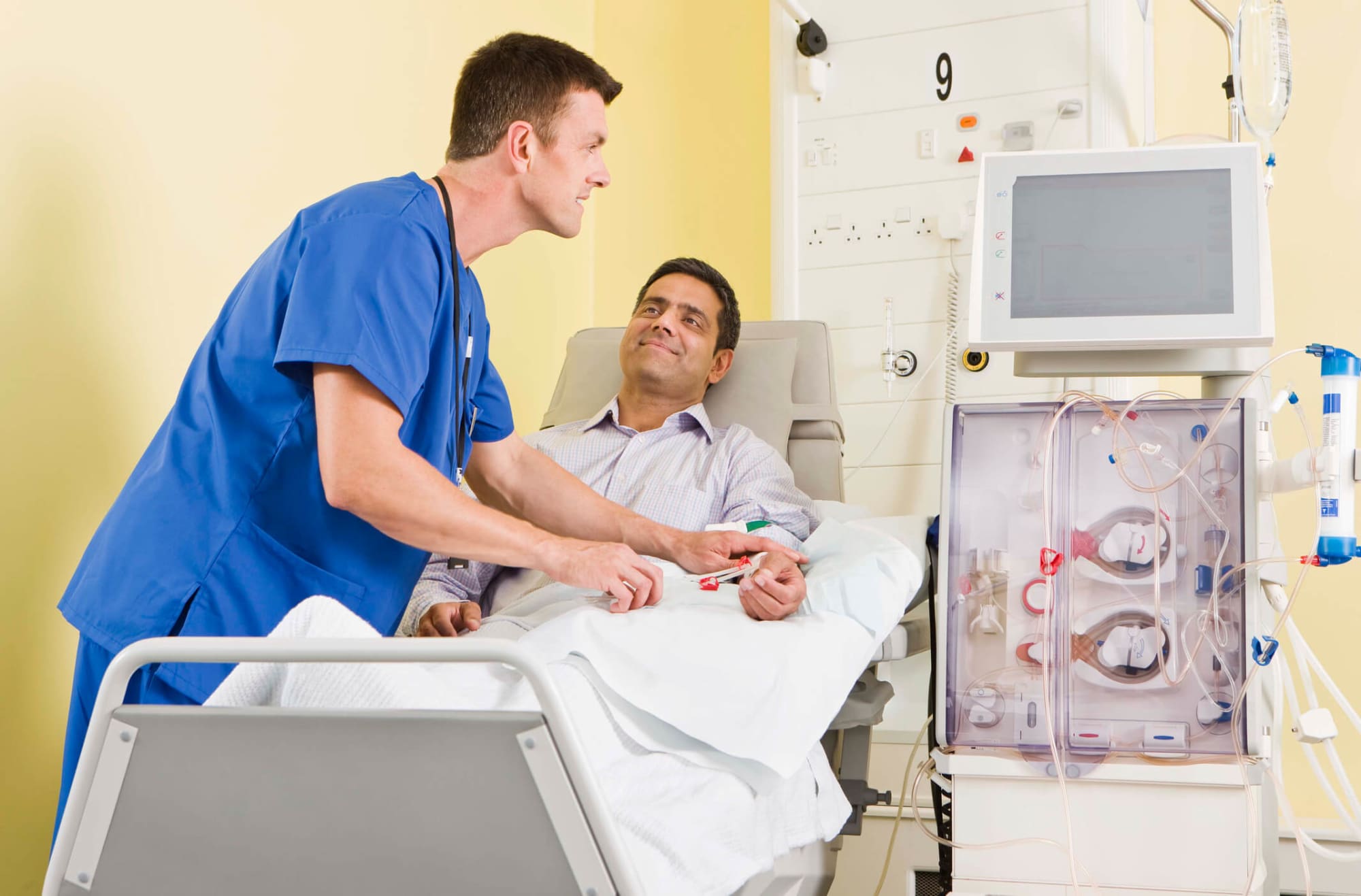 [hen-ui-text variant=”b4″ style=”font-size:small;”]Credit: Jupiterimages / Polka Dot / Getty Images Plus[/hen-ui-text]
[hen-ui-heading variant=”h3″]Advantages to Becoming a Dialysis Nurse[/hen-ui-heading][hen-ui-separator /][hen-ui-list variant=”unordered” bullet-style=”bullet”] [hen-ui-list-item][hen-ui-text variant=”b4″]Since you see the same patients frequently during the week, becoming a dialysis nurse allows you to cultivate relationships with patients.[/hen-ui-text][/hen-ui-list-item] [hen-ui-list-item][hen-ui-text variant=”b4″]Dialysis nurses—and registered nurses as a whole—can look forward to promising job growth. As more patients age, they continue to need dialysis care.[/hen-ui-text][/hen-ui-list-item] [hen-ui-list-item][hen-ui-text variant=”b4″]Opportunities for career advancement. You can earn a master’s degree and work as an [hen-ui-link href=”/careers/advanced-practice-nursing/”]advanced practice nurse[/hen-ui-link] with a dialysis specialization.[/hen-ui-text][/hen-ui-list-item] [hen-ui-list-item][hen-ui-text variant=”b4″]Some dialysis nurses also travel as part of their job.[/hen-ui-text][/hen-ui-list-item][/hen-ui-list]
[hen-ui-heading variant=”h3″]Disadvantages to Becoming a Dialysis Nurse[/hen-ui-heading][hen-ui-separator /][hen-ui-list variant=”unordered” bullet-style=”bullet”] [hen-ui-list-item][hen-ui-text variant=”b4″]Especially for those working in acute care, dialysis nurses may work long hours.[/hen-ui-text][/hen-ui-list-item] [hen-ui-list-item][hen-ui-text variant=”b4″]Like in many healthcare roles, dialysis nurses may face burnout—especially when dealing with the emotional exhaustion of working with very sick patients.[/hen-ui-text][/hen-ui-list-item] [hen-ui-list-item][hen-ui-text variant=”b4″]Some dialysis nurses must go into the hospital or facility while on call, especially if only a few nurses specializing in dialysis work at that healthcare facility.[/hen-ui-text][/hen-ui-list-item][/hen-ui-list]
[hen-ui-heading variant=”h2″]How to Become a Dialysis Nurse[/hen-ui-heading][hen-ui-heading variant=”h3″]Learn More About How To Become a Dialysis Nurse[/hen-ui-heading][hen-ui-article-card title=”Become a Dialysis Nurse” href=”/careers/dialysis-nurse/how-to-become/” size=”compact” border=”stroke”][/hen-ui-article-card]QDF block goes here
[hen-ui-heading variant=”h2″]How Much Do Dialysis Nurses Make?[/hen-ui-heading][hen-ui-text variant=”b4″]Dialysis nurse salaries vary, depending on factors such as experience and degree level. On average, a dialysis nurse’s [hen-ui-link href=”https://www.payscale.com/research/US/Job=Dialysis_Registered_Nurse_(RN)/Hourly_Rate” target=”_blank”]salary stands at about $72,000[/hen-ui-link], according to PayScale data. Entry-level nurses in the field earn an [hen-ui-link href=”https://www.payscale.com/research/US/Job=Dialysis_Registered_Nurse_(RN)/Hourly_Rate/c6456442/Entry-Level” target=”_blank”]annual salary of $59,150[/hen-ui-link], while late-career dialysis nurses earn [hen-ui-link href=”https://www.payscale.com/research/US/Job=Dialysis_Registered_Nurse_(RN)/Hourly_Rate/ebd44cc8/Late-Career” target=”_blank”]about $78,690[/hen-ui-link], on average.[/hen-ui-text][hen-ui-text variant=”b4″]Along with other registered nurses, the number of dialysis nursing jobs could increase by 7% from 2019-2029, according to the Bureau of Labor Statistics (BLS). That projected growth is faster than the average for all occupations.[/hen-ui-text][hen-ui-article-card title=”How Much Do Dialysis Nurses Make?” href=”/careers/dialysis-nurse/” size=”compact” border=”stroke”][/hen-ui-article-card][hen-ui-heading variant=”h2″]Specialty Skills for Dialysis Nurses[/hen-ui-heading][hen-ui-text variant=”b4″]Since dialysis nursing includes treating kidney disease, these nurses need specialty skills for this condition.[/hen-ui-text][hen-ui-accordion variant=”no-background”] [hen-ui-accordion-item title=”Hemodialysis”] [hen-ui-text-stack gap=”sm”] [hen-ui-text variant=”b4″]Hemodialysis involves the process of filtering a patient’s blood through an artificial kidney. The treatment attaches a dialyzer (the artificial kidney) to the patient’s blood vessels with needles. The process usually occurs at least a few times a week.[/hen-ui-text] [/hen-ui-text-stack] [/hen-ui-accordion-item] [hen-ui-accordion-item title=”Peritoneal Dialysis”] [hen-ui-text-stack gap=”sm”] [hen-ui-text variant=”b4″]This type of dialysis uses the lining of a patient’s abdomen to clean their blood. The healthcare professional places a catheter inside the patient’s body, allowing a dialysis solution to flow through their body.[/hen-ui-text] [/hen-ui-text-stack] [/hen-ui-accordion-item] [hen-ui-accordion-item title=”Transplantation”] [hen-ui-text-stack gap=”sm”] [hen-ui-text variant=”b4″]Nurses may need to assist with this procedure, which involves removing an organ from a person’s body (in this case, a kidney) and replacing it with a working version.[/hen-ui-text] [/hen-ui-text-stack] [/hen-ui-accordion-item] [hen-ui-accordion-item title=”Continuous Renal Replacement Therapy”] [hen-ui-text-stack gap=”sm”] [hen-ui-text variant=”b4″]This is a type of therapy for cleansing the blood of patients experiencing an acute kidney injury. This therapy follows a slower pace, usually over 24 hours, which can offer a better option for patients with unstable blood pressure and heart rate.[/hen-ui-text] [/hen-ui-text-stack] [/hen-ui-accordion-item] [hen-ui-accordion-item title=”Conservative Management”] [hen-ui-text-stack gap=”sm”] [hen-ui-text variant=”b4″]This involves continuing healthcare for individuals with kidney failure, but without dialysis or other kidney therapies. In other words, conservative management extends a person’s kidney function for as long as possible without actually treating it.[/hen-ui-text] [/hen-ui-text-stack] [/hen-ui-accordion-item][/hen-ui-accordion][hen-ui-heading variant=”h2″]Frequently Asked Questions[/hen-ui-heading][hen-ui-separator /][hen-ui-heading variant=”h3″]How long does it take to become a dialysis nurse?[/hen-ui-heading][hen-ui-text variant=”b4″]This depends on a nurse’s education path. Nurses first need to earn a degree. An ADN traditionally lasts two years, while a BSN may take four years to complete. After earning RN licensure, nurses must complete 2,000-3,000 hours of work within the nephrology field to obtain certification. That could take 1-2 years. Overall, it could take 3-6 years to [hen-ui-link href=”/careers/dialysis-nurse/how-to-become/”]become a dialysis nurse[/hen-ui-link].[/hen-ui-text][hen-ui-heading variant=”h3″]Is dialysis nursing considered critical care?[/hen-ui-heading][hen-ui-text variant=”b4″]Dialysis nursing is not strictly considered critical care. However, nurses who specialize in acute dialysis care work within the sphere of critical care. These nurses must give emergency procedures to individuals who need emergency or immediate dialysis treatment.[/hen-ui-text][hen-ui-heading variant=”h3″]How do you gain experience in dialysis nursing after becoming an RN?[/hen-ui-heading][hen-ui-text variant=”b4″]Before earning certification in dialysis or nephrology nursing, you must gain some experience working in the field. You can start by first participating in on-the-job training or continuing education opportunities focused on kidney disease and treatment. That way, you are more likely to find a dialysis nurse job at a hospital or outpatient treatment center.[/hen-ui-text][hen-ui-heading variant=”h3″]What opportunities for advancement are available to dialysis nurses?[/hen-ui-heading][hen-ui-text variant=”b4″]Dialysis nurses can keep growing in their careers by earning a [hen-ui-link href=”/degrees/msn/types-of-masters-degrees-in-nursing//”]master of science in nursing[/hen-ui-link] (MSN). This two-year graduate degree prepares students for advanced practice nursing, which allows them to take on more responsibilities, including meeting with patients independently. MSN graduates qualify for the [hen-ui-link href=”https://www.nncc-exam.org/certification/cnn-np” target=”_blank”]Certified Nephrology Nurse-Nurse Practitioner[/hen-ui-link] (CNN-NP) credential.[/hen-ui-text][hen-ui-heading variant=”h2″]Resources for Dialysis Nurses[/hen-ui-heading][hen-ui-list variant=”unordered” bullet-style=”check”] [hen-ui-list-item][hen-ui-heading variant=”h3″][hen-ui-link href=”https://www.annanurse.org/” target=”_blank”] American Nephrology Nurses Association (ANNA)[/hen-ui-link][/hen-ui-heading] Established as a nonprofit in 1969, this group now hosts a membership of about 8,000 nephrology nurses. The organization fights for nurses interests in state and federal health policy. It also offers several opportunities for continuing education, including online modules, activities, and a digital library of resources.[/hen-ui-list-item] [hen-ui-list-item][hen-ui-heading variant=”h3″][hen-ui-link href=”https://www.nncc-exam.org/” target=”_blank”] Nephrology Nursing Certification Commission (NNCC)[/hen-ui-link][/hen-ui-heading] Since 1987, the NNCC has offered certification for nurses within the nephrology and dialysis specializations. Individuals can find plenty of helpful certification exam preparation resources online. In addition, the group offers research grants, career mobility scholarships, and advocacy awards for nurses within this scope of practice.[/hen-ui-list-item] [hen-ui-list-item][hen-ui-heading variant=”h3″][hen-ui-link href=”https://www.annanurse.org/professional-development/grants-and-awards/educational-scholarships-grants” target=”_blank”] ANNA Educational Scholarships and Grants[/hen-ui-link][/hen-ui-heading] In addition to providing continuing education opportunities, ANNA offers several grants and scholarships ranging from $1,000-$5,000. The scholarships provide financial help for nurses who wish to advance their careers in nephrology or dialysis specialization, while the grants offer funds for nurses who wish to carry out research in their field.[/hen-ui-list-item] [hen-ui-list-item][hen-ui-heading variant=”h3″][hen-ui-link href=”https://www.theisn.org/” target=”_blank”] International Society of Nephrology (ISN)[/hen-ui-link][/hen-ui-heading] About 30,000 health professionals specializing in kidney disease make up this global organization. The group aims to advance our understanding of kidney health through education, grants, research, and advocacy. Members can participate in education webinars and conferences, or they can get involved in research and advocacy efforts.[/hen-ui-list-item][/hen-ui-list][hen-ui-separator /][hen-ui-heading variant=”h2″]Related Pages[/hen-ui-heading] [hen-ui-article-row variant=”slider” ids=”33931,34059,34437,33995″][/hen-ui-article-row][hen-ui-separator /][hen-ui-heading variant=”h2″]Reviewed by:[/hen-ui-heading][hen-ui-flex direction=”column” gap=”lg”][hen-ui-expert-bio name=”Elizabeth Clarke, FNP, MSN, RN, MSSW” img-src=”https://res.cloudinary.com/highereducation/image/upload/c_fill,g_face,h_300,w_300,f_auto,fl_lossy,q_auto:eco/e_grayscale/v1616020353/NurseJournal.org/Elizabeth_Clarke-1.jpg” img-alt=”Elizabeth Clarke, FNP, MSN, RN, MSSW” layout=”horizontal” background=”none” /][hen-ui-text variant=”b4″ slot=”contentRight”]Elizabeth Clarke (Poon) is a board-certified family nurse practitioner who provides primary and urgent care to pediatric populations. She earned a BSN and MSN from the University of Miami.[/hen-ui-text] [hen-ui-text variant=”b4″ slot=”contentRight”]Clarke is a paid member of our Healthcare Review Partner Network. [hen-ui-link href=”/healthcare-review-partners//”]Learn more about our review partners[/hen-ui-link].[/hen-ui-text][/hen-ui-flex]  [hen-ui-heading variant=”h3″ class=”py-4 my-0 text-center border-b md:pb-8 md:border-none”]You might be interested in[/hen-ui-heading] [hen-ui-article-layout ids=”36820,44511,34044″][/hen-ui-article-layout]